Lips, Cheeks, and Chin
These features may be evaluated together to support proportion, profile balance, volume, and a refreshed appearance.
Lip balanceCheek supportChin projectionFacial proportion

Facial Balancing in New Hampshire
Elite VitaMed offers facial balancing consultations and treatment planning for clients who want a more harmonious, refreshed appearance without looking overdone.
Facial balancing looks at your features as a whole instead of focusing on one isolated area. Depending on your goals, your plan may include dermal fillers, Botox or neurotoxins, Sculptra, Radiesse, PDO threads, skin support, or a staged approach.
Performed by a Nurse Practitioner and certified injector.
What It Is
Facial balancing is a personalized aesthetic approach that evaluates the face as a whole instead of treating only one feature at a time.
The goal is to support harmony between your features, improve the appearance of proportion, and create a refreshed result that still looks like you. Your provider reviews your goals, facial structure, profile, symmetry, volume patterns, movement, skin quality, treatment history, and comfort level before recommending a plan.
Who It Helps
Facial balancing may be a good fit for clients who feel like one feature is affecting the overall harmony of their face, or who want a more complete treatment plan instead of guessing which area to treat.
Final treatment recommendations are always determined after provider evaluation.
Treatment Options
Facial balancing can involve several areas depending on your anatomy, goals, and provider recommendation. Some clients may benefit from a staged plan.
These features may be evaluated together to support proportion, profile balance, volume, and a refreshed appearance.
The lower face may be evaluated for definition, harmony, volume patterns, muscle movement, or laxity concerns.
Careful evaluation may help determine whether filler, PRF, skin support, or another approach is appropriate.
Neurotoxins or other options may be discussed when movement, neck bands, or lower face muscle activity affect the overall plan.
A full face assessment helps identify which areas matter most and whether a staged approach is appropriate.
Benefits
Facial balancing considers how your features work together instead of treating one area in isolation.
The goal is to create refreshed, balanced results that fit your features and do not look overdone.
A consultation can help identify which areas may matter most for your goals.
Depending on your needs, your plan may involve filler, neurotoxins, Sculptra, Radiesse, PDO threads, skin support, or a staged plan.
Your provider determines what is appropriate based on your anatomy, history, comfort level, and desired outcome.
Facial Balancing Treatment Map
See common areas your provider may evaluate when building a personalized plan focused on facial harmony, proportion, and natural looking refinement.
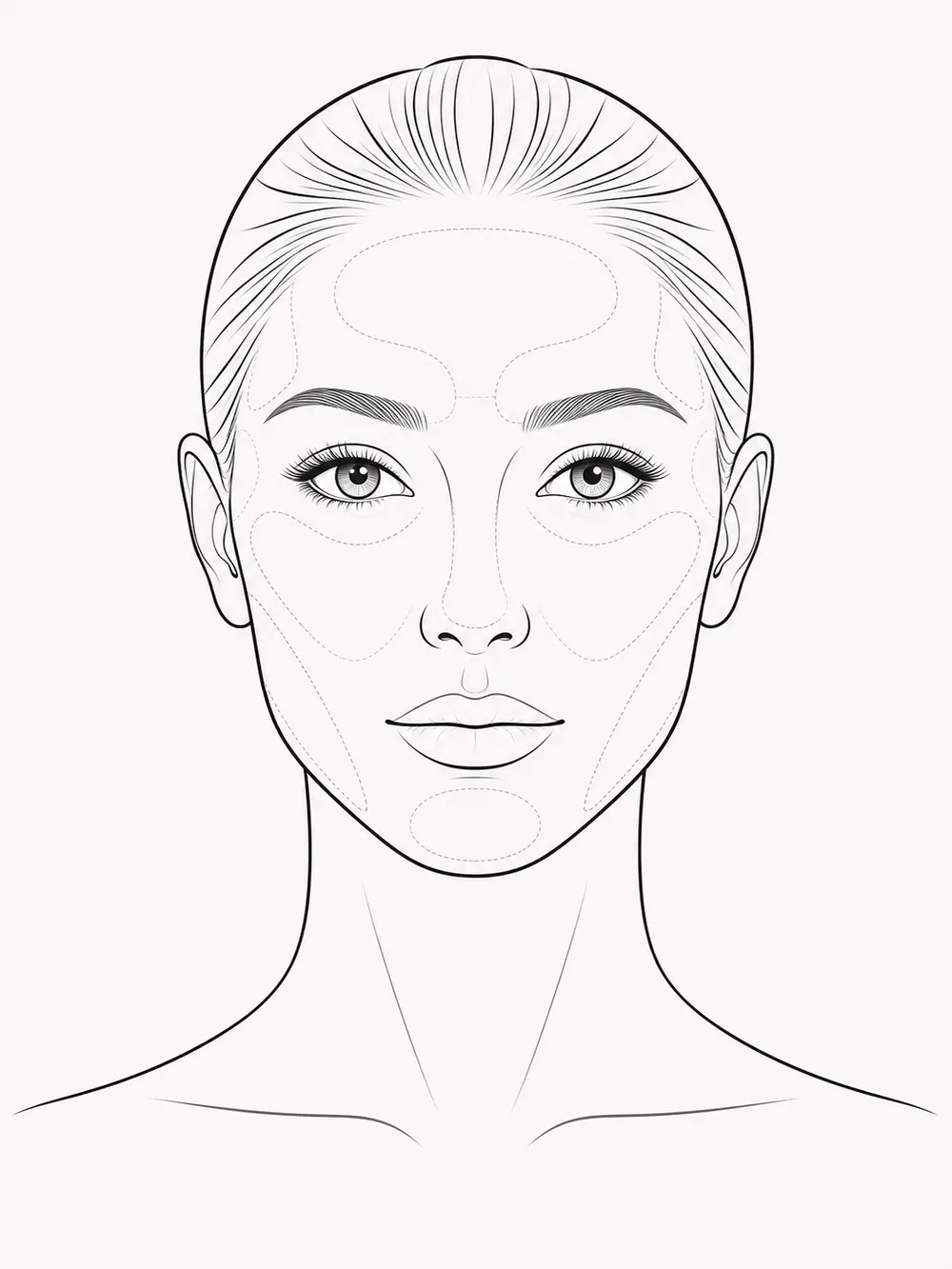
Select a gold marker to explore an area that may be considered during personalized treatment planning.
This educational map applies to male and female clients. Actual treatment areas vary by individual anatomy, skin quality, goals, and provider evaluation.
Educational Planning Guide
This map is an educational planning guide, not a recommendation to treat every area. Your provider will determine which areas and treatment options may fit your goals.
Candidacy
An ideal candidate for facial balancing is someone who wants a personalized, provider guided approach to facial harmony and natural looking refinement.
Final candidacy is always confirmed by the provider.
What To Expect
Downtime depends on which treatments are included in your facial balancing plan. Temporary swelling, redness, tenderness, bruising, firmness, or minor discomfort may occur. Your provider will explain what to expect based on your specific treatment plan.
Step 1
Your provider asks about your goals, concerns, treatment history, comfort level, and what kind of result you want.
Step 2
Your provider evaluates facial structure, symmetry, volume, profile balance, skin quality, and facial movement.
Step 3
Your provider explains which areas may be contributing most and whether filler, neurotoxins, Sculptra, Radiesse, PDO threads, or another option may be appropriate.
Step 4
If you are a candidate and ready to move forward, treatment may be performed according to your personalized plan.
Step 5
You receive aftercare instructions, expectations, and guidance on whether a staged approach or follow up may be recommended.
Downtime
Downtime depends on which treatments are included in your facial balancing plan. Temporary swelling, redness, tenderness, bruising, firmness, or minor discomfort may occur. Your provider will explain what to expect based on your specific treatment plan.
Treatment Areas
Results
Facial balancing results depend on the treatments used, areas treated, anatomy, product choice, placement, dosage, skin quality, treatment history, and individual response. Some changes may be visible sooner, while others may develop gradually over time.
Individual results vary. Final expectations and recommendations are reviewed with your provider.
Treatment Comparison
Best for clients who want a full face evaluation and personalized plan instead of treating one isolated concern.
Often discussed for volume, contour, lips, cheeks, chin, jawline, under eyes, and facial structure.
Often discussed for expression lines, muscle movement, jawline slimming, neck bands, and lower face muscle concerns.
Often discussed for gradual collagen support and natural looking facial rejuvenation over time.
Often discussed for structure, contour, and collagen stimulating support.
Often discussed for subtle lifting or skin support in appropriate candidates.
Not sure whether facial balancing, filler, neurotoxins, Sculptra, Radiesse, or PDO threads fits your goals? Start with the Injectable Treatment Assessment.
Start Injectable AssessmentSafety
Because facial balancing may involve multiple treatment areas or treatment types, provider evaluation is important. Before treatment, your provider reviews your goals, treatment history, medical history, current concerns, previous injectables, allergies, medications, and any factors that may affect candidacy.
Tell your provider if you are pregnant, breastfeeding, have active infection, recent dental work or upcoming dental procedures, a history of reactions to injectable products, autoimmune concerns, bleeding concerns, medication concerns, previous filler or threads, or any health issue that should be reviewed.
Potential risks depend on the treatments used and may include swelling, bruising, tenderness, redness, lumps, asymmetry, infection, inflammation, vascular complications, thread related concerns, or other adverse effects. Some uses or treatment areas may be considered off label.
This page is for educational purposes only and does not replace medical advice, diagnosis, consultation, or provider evaluation. Final treatment recommendations depend on your individual goals, anatomy, skin quality, medical history, treatment history, and what is appropriate for you. Individual results vary.
Your Provider
Elite VitaMed takes a provider led approach to facial balancing and injectable treatment planning. Your care is guided by a Nurse Practitioner and certified injector who understands anatomy, proportion, facial movement, safety, and natural looking results.
New Hampshire Facial Balancing Treatment
Elite VitaMed offers facial balancing consultations and treatment planning in New Hampshire and surrounding areas. This provider led approach helps clients explore fillers, Botox or neurotoxins, Sculptra, Radiesse, PDO threads, skin support, and full face rejuvenation with careful guidance.
Related Treatments
Not Sure What You Need?
If you are unsure whether facial balancing, dermal fillers, Botox or neurotoxins, Sculptra, Radiesse, PDO threads, or another injectable option fits your goals, start with the Injectable Treatment Assessment.
Financing Available
Elite VitaMed offers financing through Cherry, making it easier to move forward with injectables, IV therapy, wellness services, and personalized treatment plans.
Your aesthetic and wellness goals should feel accessible and manageable. With Cherry financing, eligible clients can split their treatment investment into flexible payments instead of paying everything upfront.
Financing is offered through Cherry. Approval, payment plans, and eligibility are subject to Cherry's terms.
Apply in just a few minutes.
Choose a payment plan that works for you.
Financing may be available for qualifying Elite VitaMed treatments.
Move forward with your treatment plan without delaying care.
Frequently Asked Questions
Facial balancing is a personalized aesthetic approach that evaluates the face as a whole instead of treating one isolated area. It may involve fillers, neurotoxins, Sculptra, Radiesse, PDO threads, skin support, or a staged treatment plan.
Not always. Filler may be part of facial balancing, but facial balancing is the overall planning approach.
Facial balancing may be a good fit for clients who want a more harmonious, refreshed appearance and are unsure which area or treatment would make the biggest difference.
Common areas may include lips, cheeks, chin, jawline, under eyes, smile lines, lower face, brows, neck, and overall profile balance.
The goal is natural looking refinement. Your treatment plan is customized to your features, goals, and comfort level.
Sometimes, but not always. Some clients may benefit from a staged approach depending on the treatments involved, amount needed, budget, comfort level, and safety considerations.
Facial balancing focuses on overall harmony, proportion, and feature balance. A non surgical face lift is usually more focused on lifting, support, and rejuvenation without surgery.
Downtime depends on the treatments used. Temporary swelling, redness, tenderness, bruising, or firmness may occur with injectables.
Start with the Injectable Treatment Assessment or book a consultation. Your provider can evaluate your goals, facial structure, and treatment options.
Yes. Botox or neurotoxins may be included if muscle movement, expression lines, jawline slimming, or lower face muscle activity is part of the concern.
Yes. Sculptra or Radiesse may be discussed if collagen support, structure, or longer term rejuvenation goals are part of the plan.
Facial balancing treatments are performed by a Nurse Practitioner and certified injector.
Your Next Step
Book your appointment, start the Injectable Treatment Assessment, or request a phone consultation if you are not sure where to begin.